Creating a software or image request, pls use GitHub
I want to upload a .md file in a tutorial to show the steps I took to enable transcribing audio files on my raspberry pi5
There people have the possibility to vote on your request 
Could you be a little more specific about what you want to upload and where? If it’s supposed to be a community tutorial, you can post it here in the forum in the appropriate category.
Yes, I have recently, with the help of AI been able to configure my raspberry Pi5 (16G) so it transcribes audio such as phone calls. Also if you choose to do so it can use diarization if you want Speaker 1 Speaker 2.
I asked AI to compile a list of instructions, I have not tried them myself, but the steps ought to be a reasonable guide for anyone else who might like to do the same, that are contained in an .md file.
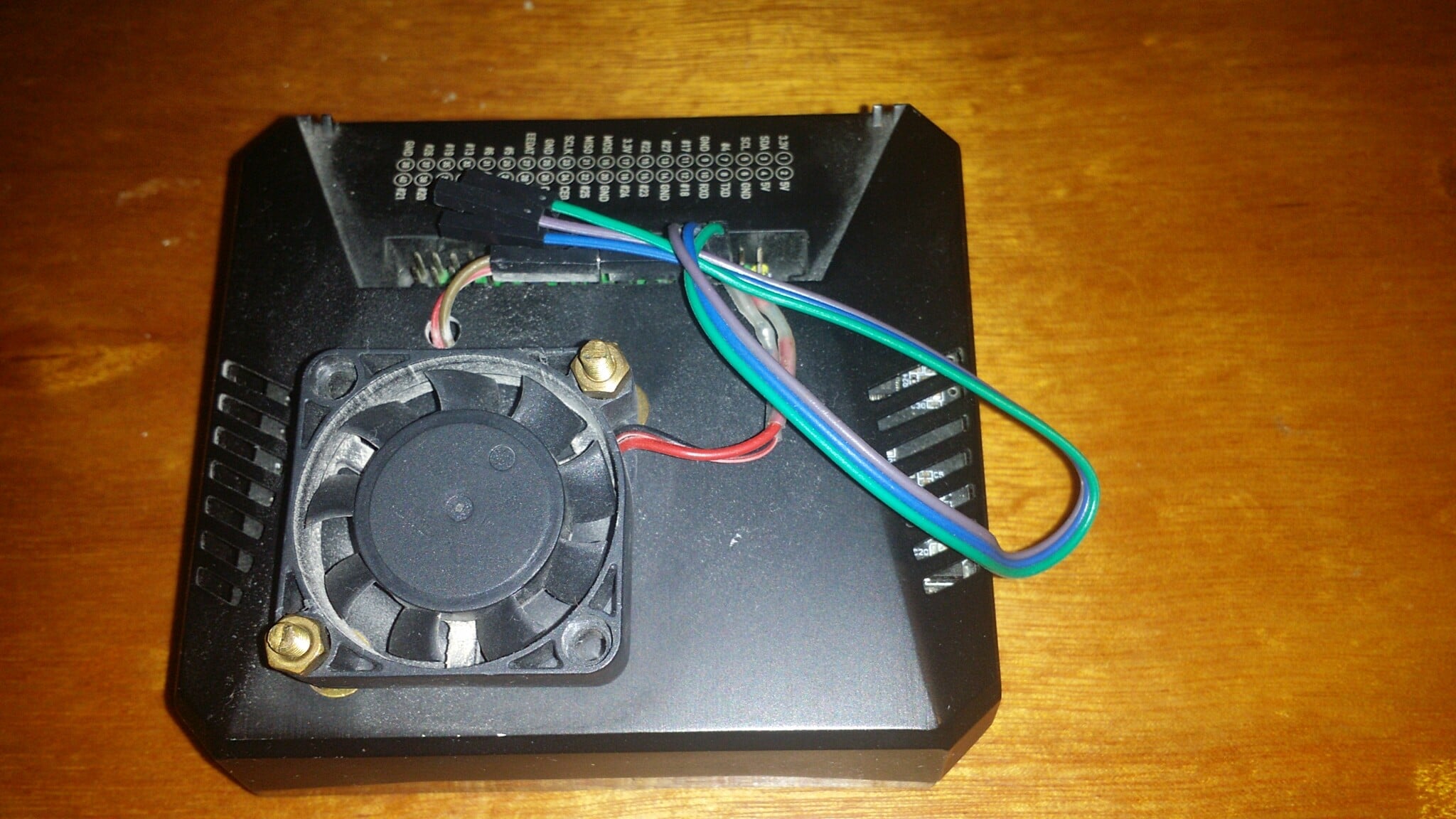
It all seems to work very well but I would add I have added much more cooling because the raspberry runs hot at around 69C when doing this task. If necessary you can also choose to use less cores to keep things cooler.
The installation uses sherpa_onnx environment, all the transcription is done locally on the Pi5
This guide is specifically written for a Raspberry Pi 5 running 64-bit DietPi 10.x.
dietpi-update for DietPi and operating-system updates.apt-get for installing the Debian packages required by this project.This guide allows another person to recreate the local Raspberry Pi 5
call-transcription system.
When complete:
transcribe = local transcription + two-speaker diarizationtranscribe --no-diarization = local transcription onlyoptimized/ is ignoredtranscripts/The reference system used a Raspberry Pi 5, ARM64/aarch64, 16 GB RAM,
DietPi/Debian, whisper.cpp, the Whisper medium.en model, and
sherpa-onnx.
uname -m
cat /boot/dietpi/.version 2>/dev/null || true
cat /etc/os-release
df -h
Architecture should normally be:
aarch64
Use a 64-bit Debian-based Raspberry Pi OS/DietPi installation.
Because this is a DietPi installation, use DietPi’s own update mechanism:
dietpi-update
Follow the prompts and reboot if DietPi requests it.
sudo apt-get install -y git cmake g++ make ffmpeg python3-venv
Check:
git --version
cmake --version
g++ --version
ffmpeg -version
python3 --version
whisper.cpp supports Raspberry Pi and its CLI uses 16-bit WAV input;
ffmpeg is therefore used to normalize source audio.
Example:
/mnt/eass-calls
Create it:
sudo mkdir -p /mnt/eass-calls
Example layout:
/mnt/eass-calls/
├── call1.wav
├── call2.mp3
├── call3.amr
└── optimized/
    └── duplicate.wav
Only files directly in the main directory are processed. optimized/ is
deliberately ignored.
If another Pi uses a different directory, change INPUT_DIR in Step 13.
sudo git clone https://github.com/ggml-org/whisper.cpp.git /opt/whisper.cpp
cd /opt/whisper.cpp
sudo cmake -B build
sudo cmake --build build -j4
Test:
/opt/whisper.cpp/build/bin/whisper-cli --help
The official project documents this CMake build and whisper-cli
workflow.
cd /opt/whisper.cpp
./models/download-ggml-model.sh medium.en
Verify:
ls -lh /opt/whisper.cpp/models/ggml-medium.en.bin
The production configuration uses medium.en for better accuracy rather
than maximum speed.
Convert a short recording:
ffmpeg -y -i /path/to/test-recording.mp3 -ar 16000 -ac 1 -c:a pcm_s16le /tmp/test.wav
Run:
/opt/whisper.cpp/build/bin/whisper-cli -m /opt/whisper.cpp/models/ggml-medium.en.bin -f /tmp/test.wav -otxt -oj -ojf -l en -t 4
If this works, the Whisper stage is ready.
python3 -m venv /opt/sherpa-onnx-env
/opt/sherpa-onnx-env/bin/pip install --upgrade pip
/opt/sherpa-onnx-env/bin/pip install sherpa-onnx sherpa-onnx-bin
The official sherpa-onnx documentation provides CPU wheels for Linux
aarch64, so a Raspberry Pi 5 can use the CPU package.
Verify:
/opt/sherpa-onnx-env/bin/python -c "import sherpa_onnx; print(sherpa_onnx.__version__)"
sudo mkdir -p /opt/sherpa-onnx-models
Create:
sudo mkdir -p /opt/sherpa-onnx-models/sherpa-onnx-pyannote-segmentation-3-0
Download the official sherpa-onnx pyannote segmentation model and place:
model.int8.onnx
at:
/opt/sherpa-onnx-models/sherpa-onnx-pyannote-segmentation-3-0/model.int8.onnx
Verify:
ls -lh /opt/sherpa-onnx-models/sherpa-onnx-pyannote-segmentation-3-0/model.int8.onnx
Use:
3dspeaker_speech_eres2net_base_sv_zh-cn_3dspeaker_16k.onnx
Place it at:
/opt/sherpa-onnx-models/3dspeaker_speech_eres2net_base_sv_zh-cn_3dspeaker_16k.onnx
Verify:
ls -lh /opt/sherpa-onnx-models/3dspeaker_speech_eres2net_base_sv_zh-cn_3dspeaker_16k.onnx
/opt/sherpa-onnx-env/bin/python - <<'PY'
import sherpa_onnx
from pathlib import Path

seg = Path("/opt/sherpa-onnx-models/sherpa-onnx-pyannote-segmentation-3-0/model.int8.onnx")
emb = Path("/opt/sherpa-onnx-models/3dspeaker_speech_eres2net_base_sv_zh-cn_3dspeaker_16k.onnx")

print("sherpa-onnx:", sherpa_onnx.__version__)
print("segmentation:", seg.exists())
print("embedding:", emb.exists())
PY
Both model checks must be True.
Create:
sudo nano /opt/transcribe_calls.py
Paste the complete production script from Appendix A.
Change only this value if the recording directory differs:
INPUT_DIR = Path("/mnt/eass-calls")
The important fixed paths are:
WORK_DIR = INPUT_DIR / ".transcription_work"
OUTPUT_DIR = INPUT_DIR / "transcripts"

WHISPER_BIN = Path("/opt/whisper.cpp/build/bin/whisper-cli")
WHISPER_MODEL = Path("/opt/whisper.cpp/models/ggml-medium.en.bin")

SEGMENTATION_MODEL = Path(
    "/opt/sherpa-onnx-models/"
    "sherpa-onnx-pyannote-segmentation-3-0/model.int8.onnx"
)

EMBEDDING_MODEL = Path(
    "/opt/sherpa-onnx-models/"
    "3dspeaker_speech_eres2net_base_sv_zh-cn_3dspeaker_16k.onnx"
)
python3 -m py_compile /opt/transcribe_calls.py
No output means the syntax check passed.
sudo mkdir -p /opt/call-pipeline
sudo nano /opt/call-pipeline/run-calls.sh
Put:
#!/bin/sh
exec /opt/sherpa-onnx-env/bin/python /opt/transcribe_calls.py "$@"
Then:
sudo chmod +x /opt/call-pipeline/run-calls.sh
transcribe commandsudo ln -sf /opt/call-pipeline/run-calls.sh /usr/local/bin/transcribe
Check:
ls -l /usr/local/bin/transcribe
transcribe --help
It should show:
--no-diarization
and explain that normal operation performs transcription plus
two-speaker diarization.
Put a short recording in the input directory and run:
transcribe --no-diarization
Check:
ls -lh /mnt/eass-calls/transcripts/
Adjust the path if INPUT_DIR is different.
Run:
transcribe
This enables two-speaker diarization.
Test with a short recording before processing important long calls.
Once testing is successful:
transcribe
Supported files:
.wav
.mp3
.amr
Only top-level recordings are processed.
transcribe --no-diarization
This skips speaker identification but still creates timestamped
transcription.
Example:
/mnt/eass-calls/
├── call.wav
├── optimized/
├── .transcription_work/
└── transcripts/
    ├── call.txt
    └── call.json
optimized/ is ignored.
.transcription_work/ stores intermediate work.
transcripts/ stores final results.
Example:
[00:00.00 - 00:05.44] Speaker 2:
Hello, we'd like to speak to you, John. Speaking.

[00:05.44 - 00:09.24] Speaker 2:
Hi, my name is Terri, I'm calling to ask you if you'd like to speak to me?

[00:09.24 - 00:16.04] Speaker 1:
Oh, hello. Yeah, I was just on my way out but I'll come back in again to speak to you.
Each entry contains:
{
  "start": 0.0,
  "end": 5.44,
  "speaker": 1,
  "speaker_label": "Speaker 2",
  "speaker_overlap": 1.5018751621246338,
  "text": "Hello, we'd like to speak to you, John. Speaking."
}
Speaker 1 and Speaker 2 are anonymous diarization labels, not real
identities.
The production configuration uses:
num_clusters=2
It is intended for two-person calls.
If a recording has three or more speakers, assignments can be wrong.
If both final files already exist:
transcripts/<name>.txt
transcripts/<name>.json
the recording is skipped.
Example:
SKIP: call.wav (completed)
Therefore it is safe to run:
transcribe
again after adding new recordings.
The original WAV/MP3/AMR files are not overwritten.
ffmpeg creates normalized audio inside:
.transcription_work/
Install tmux:
sudo apt-get install -y tmux
Start:
tmux new -s transcription
Run:
transcribe
Detach with:
Ctrl+B
D
Later:
tmux attach -t transcription
Do not start two transcribe processes against the same input
directory.
Use one production process at a time.
df -h
Long recordings create temporary normalized audio and require space for
the model and final outputs.
free -h
The reference setup used 16 GB RAM.
Use active cooling and good ventilation for long transcription jobs.
test -x /opt/whisper.cpp/build/bin/whisper-cli && echo "whisper-cli OK"
test -f /opt/whisper.cpp/models/ggml-medium.en.bin && echo "Whisper model OK"
test -f /opt/sherpa-onnx-models/sherpa-onnx-pyannote-segmentation-3-0/model.int8.onnx && echo "Segmentation OK"
test -f /opt/sherpa-onnx-models/3dspeaker_speech_eres2net_base_sv_zh-cn_3dspeaker_16k.onnx && echo "Embedding OK"
test -x /opt/call-pipeline/run-calls.sh && echo "Wrapper OK"
test -L /usr/local/bin/transcribe && echo "Command OK"
ls -l /usr/local/bin/transcribe
If necessary:
sudo ln -sf /opt/call-pipeline/run-calls.sh /usr/local/bin/transcribe
hash -r
transcribe --help
/opt/sherpa-onnx-env/bin/python -c "import sherpa_onnx; print(sherpa_onnx.__version__)"
If missing:
/opt/sherpa-onnx-env/bin/pip install --upgrade sherpa-onnx sherpa-onnx-bin
ls -lh /opt/whisper.cpp/models/ggml-medium.en.bin
ls -lh /opt/sherpa-onnx-models/sherpa-onnx-pyannote-segmentation-3-0/model.int8.onnx
ls -lh /opt/sherpa-onnx-models/3dspeaker_speech_eres2net_base_sv_zh-cn_3dspeaker_16k.onnx
ffprobe /path/to/file.wav
The pipeline normalizes audio to:
16 kHz
mono
16-bit PCM WAV
If transcription works but diarization fails:
The processing path is local:
recording
  -> local ffmpeg
  -> local whisper.cpp
  -> local sherpa-onnx
  -> local TXT/JSON
No OpenRouter audio-transcription credit is required.
Keep API keys/tokens out of the script and guide.
sudo tar -czf /root/call-transcription-config.tar.gz /opt/transcribe_calls.py /opt/call-pipeline/run-calls.sh
If offline rebuilding is important, also preserve the model files.
uname -m
python3 --version
ffmpeg -version | head -n 1
cmake --version | head -n 1
/opt/sherpa-onnx-env/bin/python -c   "import sherpa_onnx; print('sherpa-onnx', sherpa_onnx.__version__)"
Also:
cd /opt/whisper.cpp
git rev-parse HEAD
Put one short test call in the input directory.
Run:
transcribe
Confirm:
transcripts/test-call.txt
transcripts/test-call.json
Then:
transcribe --no-diarization
The Pi is ready when both modes work.
Default:
transcribe
Transcription only:
transcribe --no-diarization
Help:
transcribe --help
Paste this into /opt/transcribe_calls.py:
#!/usr/bin/env python3

import argparse
import json
import subprocess
import sys
from pathlib import Path

import numpy as np
import sherpa_onnx

INPUT_DIR = Path("/mnt/eass-calls")
WORK_DIR = INPUT_DIR / ".transcription_work"
OUTPUT_DIR = INPUT_DIR / "transcripts"

WHISPER_BIN = Path("/opt/whisper.cpp/build/bin/whisper-cli")
WHISPER_MODEL = Path("/opt/whisper.cpp/models/ggml-medium.en.bin")

SEGMENTATION_MODEL = Path(
    "/opt/sherpa-onnx-models/"
    "sherpa-onnx-pyannote-segmentation-3-0/model.int8.onnx"
)

EMBEDDING_MODEL = Path(
    "/opt/sherpa-onnx-models/"
    "3dspeaker_speech_eres2net_base_sv_zh-cn_3dspeaker_16k.onnx"
)

SUPPORTED_EXTENSIONS = {".wav", ".mp3", ".amr"}

def die(message):
    print(f"ERROR: {message}", file=sys.stderr)
    raise SystemExit(1)

def run_command(command):
    print("+", " ".join(str(x) for x in command))
    subprocess.run(command, check=True)

def prepare_audio(source, destination):
    destination.parent.mkdir(parents=True, exist_ok=True)
    if destination.exists():
        return
    run_command([
        "ffmpeg", "-y", "-i", str(source),
        "-ar", "16000", "-ac", "1",
        "-c:a", "pcm_s16le", str(destination)
    ])

def run_whisper(audio_path, whisper_work):
    whisper_work.mkdir(parents=True, exist_ok=True)
    json_path = whisper_work / "whisper.json"
    if json_path.exists():
        return json_path
    prefix = whisper_work / "whisper"
    run_command([
        str(WHISPER_BIN),
        "-m", str(WHISPER_MODEL),
        "-f", str(audio_path),
        "-otxt", "-oj", "-ojf",
        "-of", str(prefix),
        "-l", "en",
        "-t", "4",
    ])
    if not json_path.exists():
        die(f"Whisper did not create {json_path}")
    return json_path

def load_whisper_segments(json_path):
    with json_path.open("r", encoding="utf-8") as f:
        data = json.load(f)
    segments = []
    for item in data.get("transcription", []):
        start = float(item.get("offsets", {}).get("from", 0)) / 1000.0
        end = float(item.get("offsets", {}).get("to", 0)) / 1000.0
        text = item.get("text", "").strip()
        if text and end > start:
            segments.append({"start": start, "end": end, "text": text})
    return segments

def load_audio_samples(wav_path):
    import wave
    with wave.open(str(wav_path), "rb") as wf:
        channels = wf.getnchannels()
        sample_width = wf.getsampwidth()
        sample_rate = wf.getframerate()
        frames = wf.readframes(wf.getnframes())
    if channels != 1:
        die(f"Expected mono audio, got {channels} channels")
    if sample_width != 2:
        die(f"Expected 16-bit PCM audio, got {sample_width * 8}-bit")
    if sample_rate != 16000:
        die(f"Expected 16 kHz audio, got {sample_rate} Hz")
    return np.frombuffer(frames, dtype=np.int16).astype(np.float32) / 32768.0

def make_diarization_config():
    seg_config = sherpa_onnx.OfflineSpeakerSegmentationPyannoteModelConfig(
        model=str(SEGMENTATION_MODEL),
        window_shift_ratio=0.1,
    )
    seg_base = sherpa_onnx.OfflineSpeakerSegmentationModelConfig(
        pyannote=seg_config
    )
    emb_config = sherpa_onnx.SpeakerEmbeddingExtractorConfig(
        model=str(EMBEDDING_MODEL),
        num_threads=4,
        provider="cpu",
    )
    cluster_config = sherpa_onnx.FastClusteringConfig(
        num_clusters=2,
        threshold=0.5,
    )
    return sherpa_onnx.OfflineSpeakerDiarizationConfig(
        segmentation=seg_base,
        embedding=emb_config,
        clustering=cluster_config,
        min_duration_on=0.3,
        min_duration_off=0.5,
    )

def run_diarization(audio_path):
    samples = load_audio_samples(audio_path)
    diarization = sherpa_onnx.OfflineSpeakerDiarization(
        make_diarization_config()
    )
    result = diarization.process(samples)
    segments = []
    for segment in result:
        start = float(segment.start)
        end = float(segment.end)
        speaker = int(segment.speaker)
        if end > start:
            segments.append({
                "start": start,
                "end": end,
                "speaker": speaker,
            })
    return segments

def overlap(a_start, a_end, b_start, b_end):
    return max(0.0, min(a_end, b_end) - max(a_start, b_start))

def assign_speaker(transcript_segment, diarization_segments):
    best_speaker = None
    best_overlap = 0.0
    for diar in diarization_segments:
        amount = overlap(
            transcript_segment["start"],
            transcript_segment["end"],
            diar["start"],
            diar["end"],
        )
        if amount > best_overlap:
            best_overlap = amount
            best_speaker = diar["speaker"]
    return best_speaker, best_overlap

def speaker_label(speaker):
    return None if speaker is None else f"Speaker {speaker + 1}"

def write_outputs(source, transcript_segments, diarization_segments):
    OUTPUT_DIR.mkdir(parents=True, exist_ok=True)
    txt_path = OUTPUT_DIR / f"{source.stem}.txt"
    json_path = OUTPUT_DIR / f"{source.stem}.json"
    final = []
    for item in transcript_segments:
        speaker, speaker_overlap = assign_speaker(
            item, diarization_segments
        )
        final.append({
            "start": item["start"],
            "end": item["end"],
            "speaker": None if speaker is None else speaker,
            "speaker_label": speaker_label(speaker),
            "speaker_overlap": speaker_overlap,
            "text": item["text"],
        })
    with json_path.open("w", encoding="utf-8") as f:
        json.dump(final, f, ensure_ascii=False, indent=2)
    with txt_path.open("w", encoding="utf-8") as f:
        for item in final:
            start = item["start"]
            end = item["end"]
            sm = int(start // 60)
            ss = start - sm * 60
            em = int(end // 60)
            es = end - em * 60
            f.write(
                f"[{sm:02d}:{ss:05.2f} - {em:02d}:{es:05.2f}] "
                f"{item['speaker_label']}:
"
            )
            f.write(item["text"])
            f.write("

")
    return txt_path, json_path

def write_transcription_only_outputs(source, transcript_segments):
    OUTPUT_DIR.mkdir(parents=True, exist_ok=True)
    txt_path = OUTPUT_DIR / f"{source.stem}.txt"
    json_path = OUTPUT_DIR / f"{source.stem}.json"
    final = [{
        "start": item["start"],
        "end": item["end"],
        "speaker": None,
        "speaker_label": None,
        "speaker_overlap": 0.0,
        "text": item["text"],
    } for item in transcript_segments]
    with json_path.open("w", encoding="utf-8") as f:
        json.dump(final, f, ensure_ascii=False, indent=2)
    with txt_path.open("w", encoding="utf-8") as f:
        for item in final:
            start = item["start"]
            end = item["end"]
            sm = int(start // 60)
            ss = start - sm * 60
            em = int(end // 60)
            es = end - em * 60
            f.write(f"[{sm:02d}:{ss:05.2f} - {em:02d}:{es:05.2f}]:
")
            f.write(item["text"])
            f.write("

")
    return txt_path, json_path

def process_recording(source, diarize):
    WORK_DIR.mkdir(parents=True, exist_ok=True)
    OUTPUT_DIR.mkdir(parents=True, exist_ok=True)

    txt_path = OUTPUT_DIR / f"{source.stem}.txt"
    json_path = OUTPUT_DIR / f"{source.stem}.json"

    if txt_path.exists() and json_path.exists():
        print(f"SKIP: {source.name} (completed)")
        return

    work = WORK_DIR / source.stem
    audio_path = work / "audio-16k-mono.wav"
    whisper_work = work / "whisper"

    print()
    print("=" * 70)
    print(f"PROCESSING: {source.name}")
    print("=" * 70)

    prepare_audio(source, audio_path)
    whisper_json = run_whisper(audio_path, whisper_work)
    transcript_segments = load_whisper_segments(whisper_json)

    if not transcript_segments:
        die(f"No transcript segments found for {source}")

    if diarize:
        print("Running 2-speaker diarization...")
        diarization_segments = run_diarization(audio_path)
        txt, js = write_outputs(
            source, transcript_segments, diarization_segments
        )
    else:
        print("Diarization disabled.")
        txt, js = write_transcription_only_outputs(
            source, transcript_segments
        )

    print(f"TXT:  {txt}")
    print(f"JSON: {js}")

def main():
    parser = argparse.ArgumentParser(
        description="Transcribe and diarize WAV, MP3, and AMR call recordings."
    )
    parser.add_argument(
        "--no-diarization",
        action="store_true",
        help="Transcribe only; skip speaker diarization.",
    )
    args = parser.parse_args()

    if not INPUT_DIR.exists():
        die(f"Input directory does not exist: {INPUT_DIR}")
    if not WHISPER_BIN.exists():
        die(f"Whisper executable not found: {WHISPER_BIN}")
    if not WHISPER_MODEL.exists():
        die(f"Whisper model not found: {WHISPER_MODEL}")

    if not args.no_diarization:
        if not SEGMENTATION_MODEL.exists():
            die(f"Segmentation model not found: {SEGMENTATION_MODEL}")
        if not EMBEDDING_MODEL.exists():
            die(f"Embedding model not found: {EMBEDDING_MODEL}")

    recordings = sorted(
        p for p in INPUT_DIR.iterdir()
        if p.is_file() and p.suffix.lower() in SUPPORTED_EXTENSIONS
    )

    print(f"Found {len(recordings)} recording(s).")
    print(
        "Mode: transcription only"
        if args.no_diarization
        else "Mode: transcription + diarization"
    )

    for source in recordings:
        process_recording(source, diarize=not args.no_diarization)

    print()
    print("=" * 70)
    print("ALL DONE")
    print("=" * 70)

if __name__ == "__main__":
    main()
Run:
uname -m
/opt/whisper.cpp/build/bin/whisper-cli --help
ls -lh /opt/whisper.cpp/models/ggml-medium.en.bin
/opt/sherpa-onnx-env/bin/python -c "import sherpa_onnx; print(sherpa_onnx.__version__)"
python3 -m py_compile /opt/transcribe_calls.py
transcribe --help
Then test:
transcribe
and:
transcribe --no-diarization
Default:
transcribe
Transcription only:
transcribe --no-diarization
Help:
transcribe --help
Final results:
<INPUT_DIR>/transcripts/
Temporary processing:
<INPUT_DIR>/.transcription_work/
Original recordings are left untouched.
This is a native Markdown forum, so you can/should just copy&paste the content of the md file into a comment/topic. A round trip through downloading the md file first here makes things unnecessarily complicated, and it cannot be edited like a post, only reuploaded, and not searched with the forum search.
You copied the text, but not the Markdown syntax. Try to open the .md file with a simple text editor, which show the syntax, and copy that into the post.
Some remarks:
apt-get update at all. dietpi-update implies this in any case.sudo for our scripts. They internally re-exec themselves with sudo, if the user is not root already.python3-pip. python3-venv includes the pip wheel, and installs it to generated venv’s automatically. python3-pip is for a global system pip instance, which doesn’t really work anymore. So that package is mostly obsolete./opt/whisper.cpp will be owned by root. Then you attempt to build it as parent user in a build subdir, which it has no permissions to create. The build needs to be done as root/sudo, too, or in the current user’s home dir. It can be moved to /opt after cloned and built elsewhere.Hi MichaIng, Thank you for your input, please feel free to change tutorial to make it work successfully. The tutorial was originally made for Debian.
I have all this running perfectly on my Rpi5.
Thanks