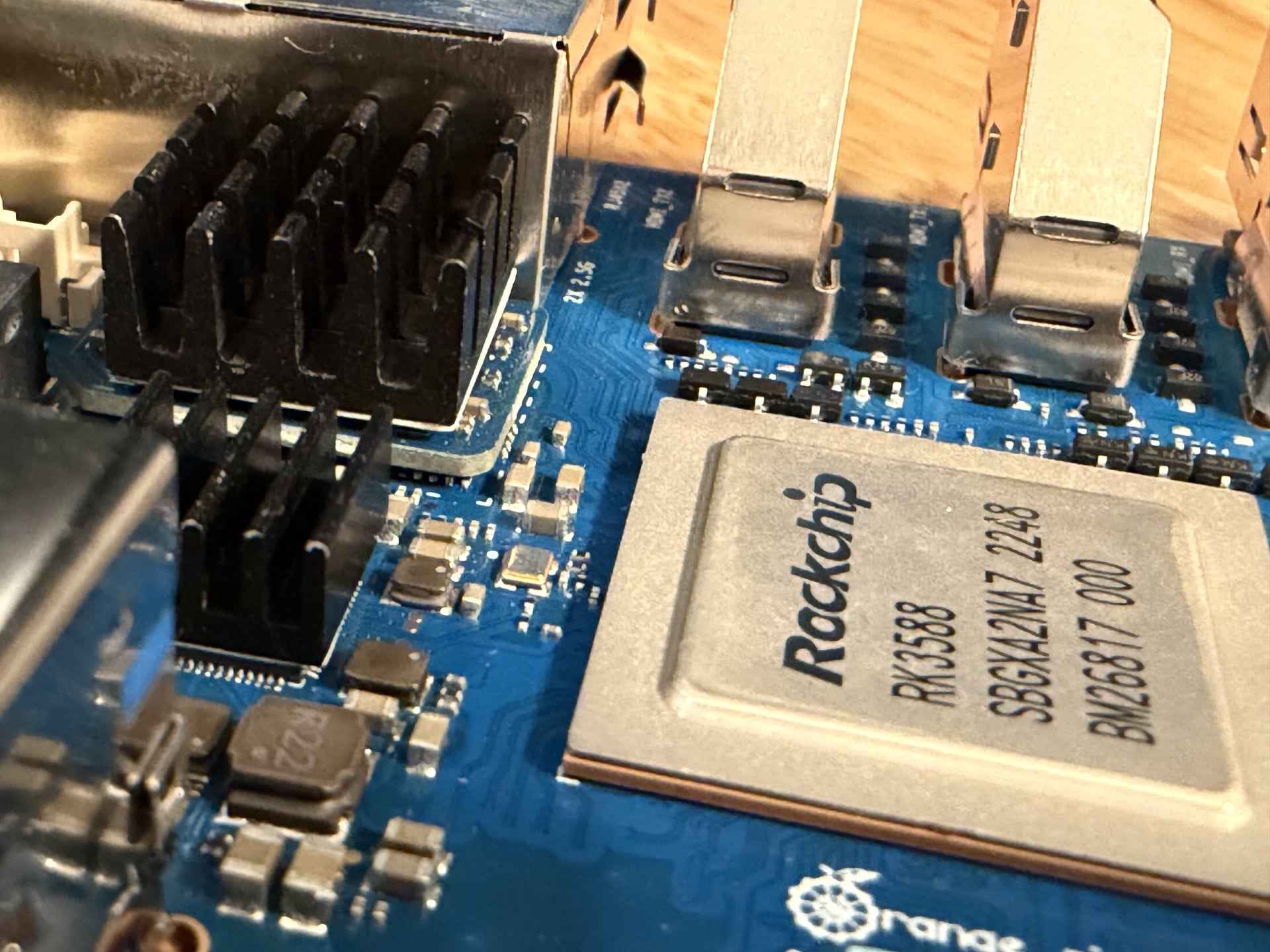
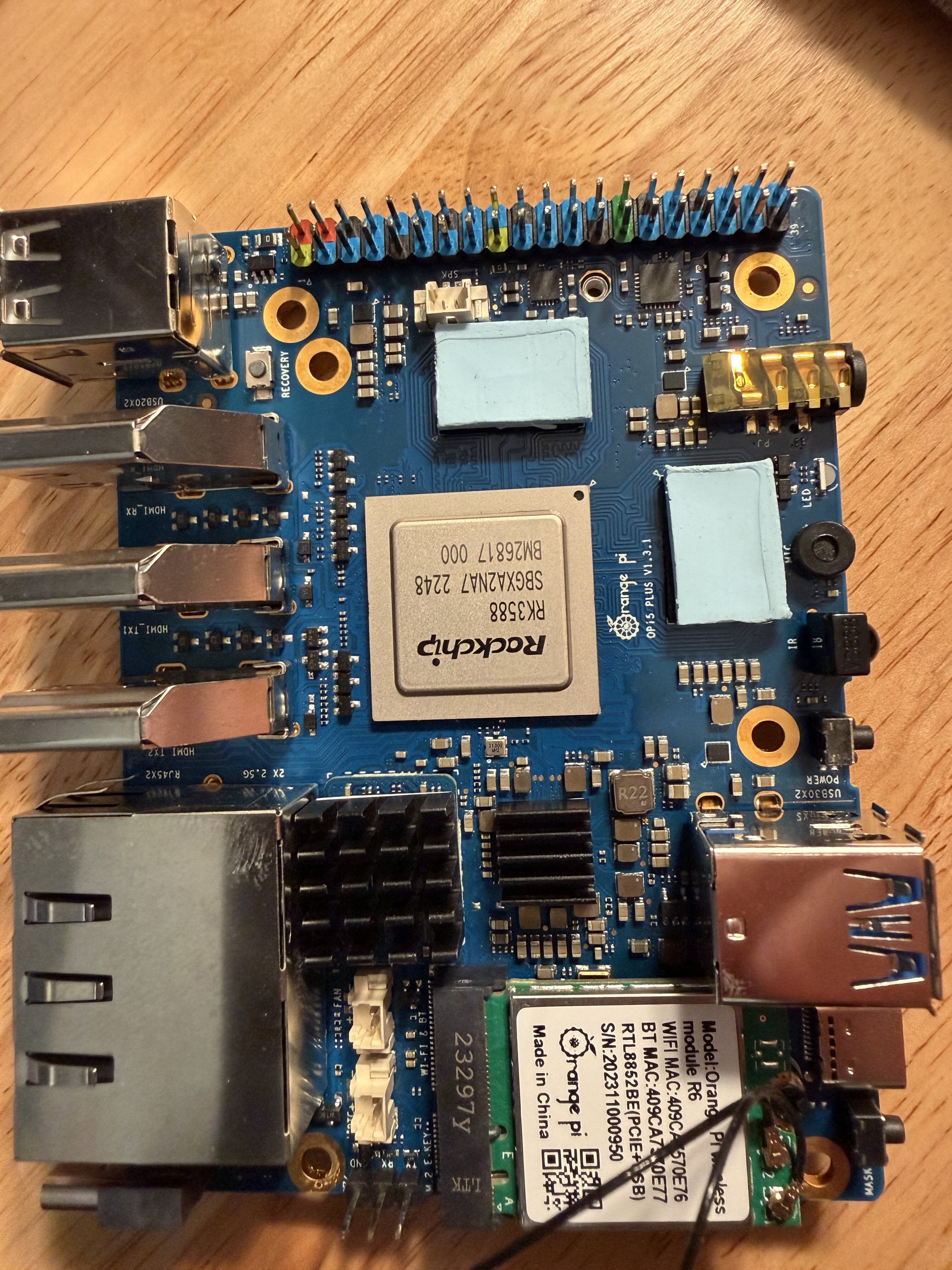
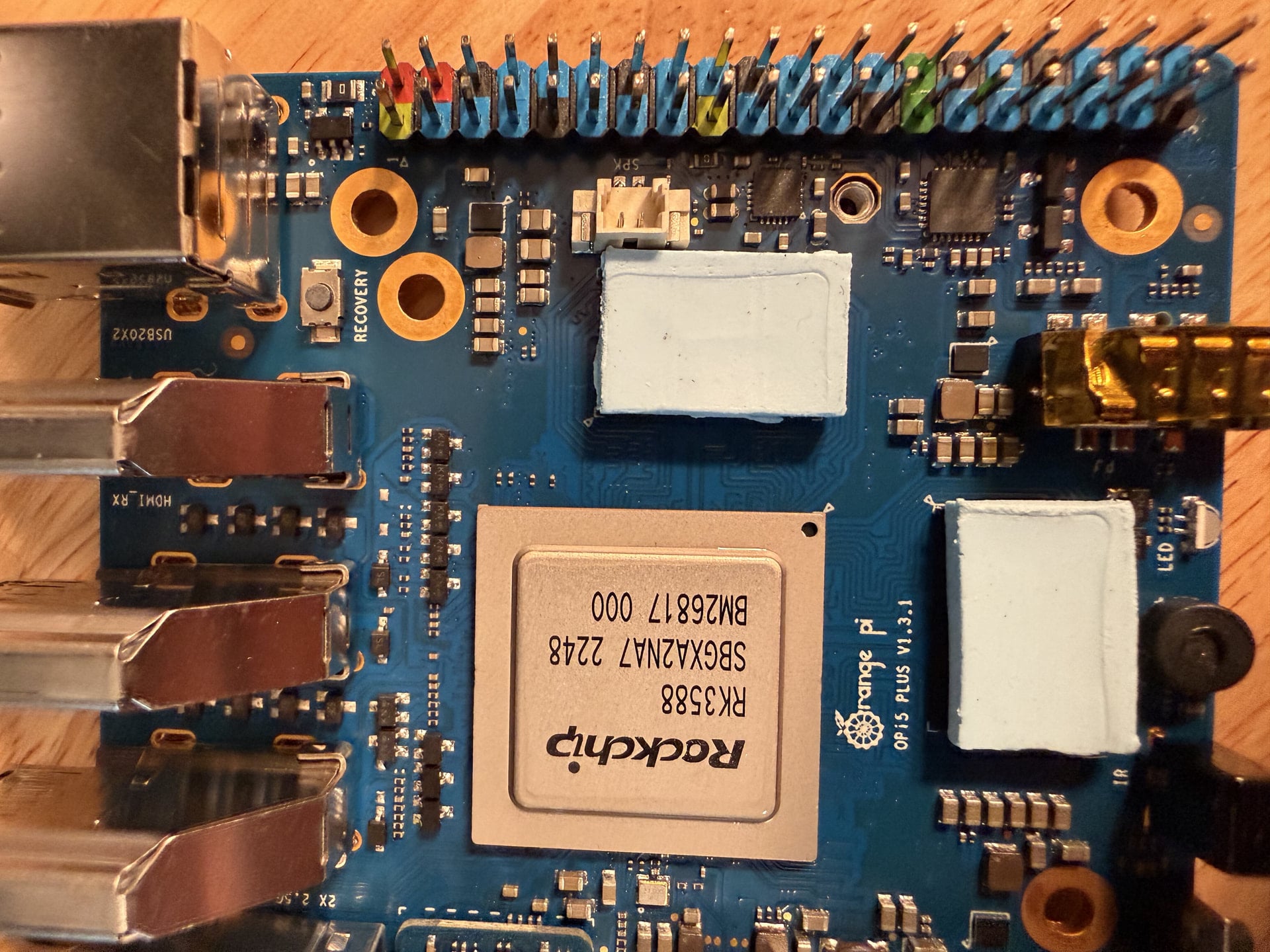
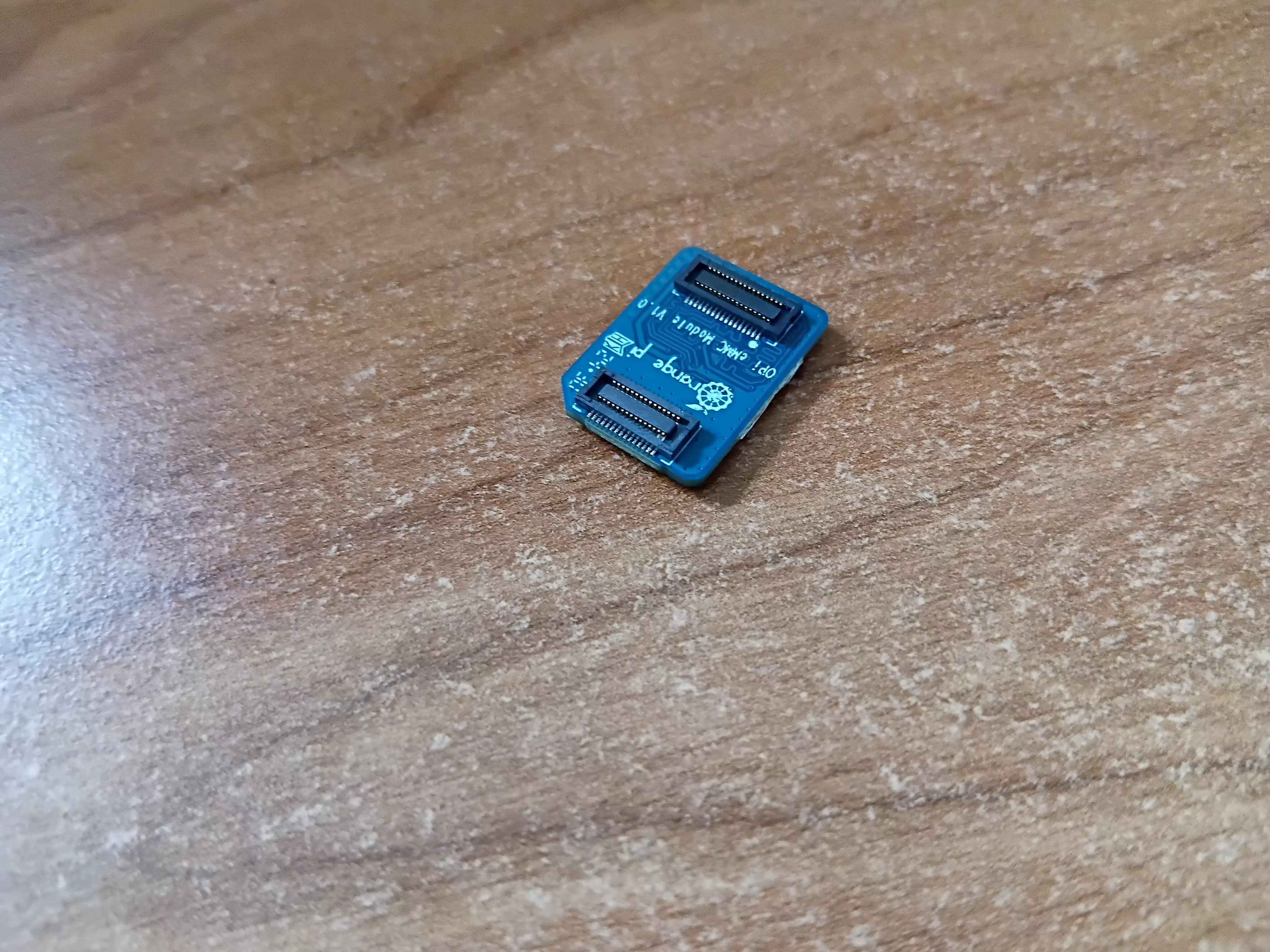
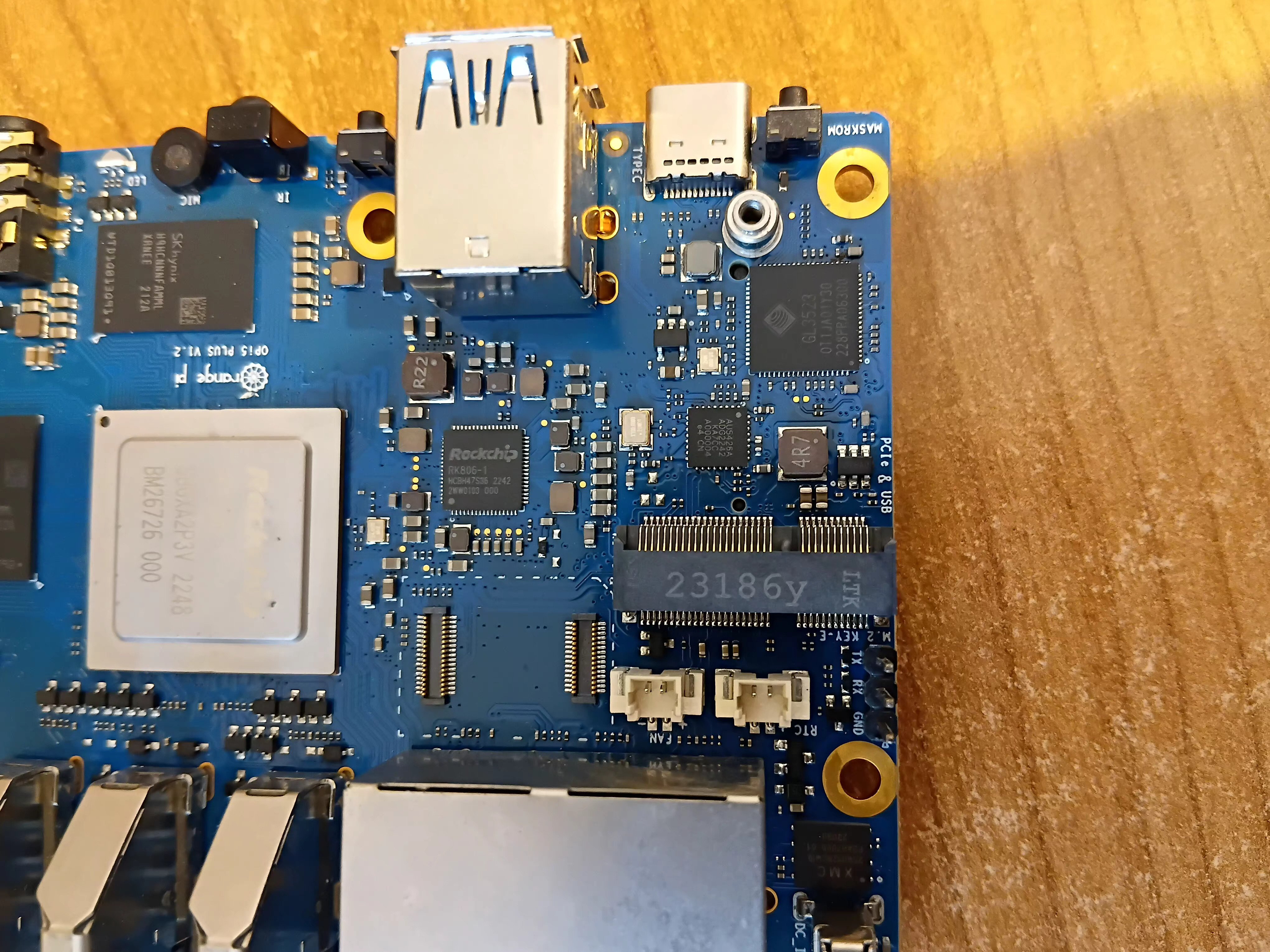
I just tested it, and my Orange Pi 5 Plus boots fine from eMMC with mainline Linux and the new U-Boot. Interestingly, that bootloader even dynamically loads the correct device tree for different Orange Pi 5 variants: Since I have a single eMMC module with those two connector rows only, attached to the Orange Pi 5 Ultra, I switched to mainline kernel + U-Boot for Orange Pi 5 Plus there. And out of interest, I rebooted, and it did still load the Orange Pi 5 Ultra device tree. Plugging that eMMC module to the Orange Pi 5 Plus, it booted the Orange Pi 5 Plus device tree, without me defining it explicitly anywhere. For mainline U-Boot, such is very uncommon, hence I thought it would be still vendor U-Boot, but:
U-Boot SPL 2026.01_armbian-2026.01-S127a-P9249-He141-V7dfd-B1ec4-R448a (May 01 2026 - 22:27:13 +0000)
Trying to boot from SPI
## Checking hash(es) for config config-1 ... OK
## Checking hash(es) for Image atf-1 ... sha256+ OK
## Checking hash(es) for Image u-boot ... sha256+ OK
## Checking hash(es) for Image fdt-1 ... sha256+ OK
## Checking hash(es) for Image atf-2 ... sha256+ OK
## Checking hash(es) for Image atf-3 ... sha256+ OK
NOTICE:  BL31: v2.13.0(release):armbian
NOTICE:  BL31: Built : 22:25:59, May  1 2026
INFO:    GICv3 without legacy support detected.
INFO:    ARM GICv3 driver initialized in EL3
INFO:    Maximum SPI INTID supported: 511
INFO:    BL31: Initializing runtime services
INFO:    BL31: Preparing for EL3 exit to normal world
INFO:    Entry point address = 0x800000
INFO:    SPSR = 0x3c9


U-Boot 2026.01_armbian-2026.01-S127a-P9249-He141-V7dfd-B1ec4-R448a (May 01 2026 - 22:27:13 +0000)

Model: Xunlong Orange Pi 5 Plus
And Armbian explicitly chooses mainline U-Boot for non-vendor branch: build/config/boards/orangepi5-plus.conf at 3ae63519fd2dffcd7d5654e4b51b8bc666415e76 · armbian/build · GitHub
This is a quite big help for me testing new kernel versions on those two SBCs. Another thing I recognized (with mainline kernel), is that the Ethernet interfaces seem to be assigned consistently now:
[    2.626717] r8169 0003:31:00.0 eth0: RTL8125B, c0:74:2b:ff:5b:f2, XID 641, IRQ 130
[    2.627388] r8169 0003:31:00.0 eth0: jumbo features [frames: 16362 bytes, tx checksumming: ko]
[    2.659883] r8169 0004:41:00.0 eth1: RTL8125B, c0:74:2b:ff:5b:f3, XID 641, IRQ 131
[    2.660553] r8169 0004:41:00.0 eth1: jumbo features [frames: 16362 bytes, tx checksumming: ko]
So the outer port is always eth0, the inner one always eth1, without /etc/udev/rules.d/99-dietpi-orangepi5plus.rules. If you do the switch, it would be great if you could test this as well, that after (re)moving that file, the interface names remain attached to the same Ethernet ports. So we could then remove those udev rules on mainline Linux.
One negative thing, though currently not sure whether this was better with vendor kernel: The blue and green LEDs have no trigger applied by default, i.e. only the red power LED remains lid, and one cannot see when the kernel has been loaded, aside of a single short green LED flash. Can be done with dietpi-led_control, but I want to assign heartbeat as default trigger for one of them: If at all, which one is doing the heartbeat with vendor kernel, the green or the blue one? Or any preference about which of the two should blink?
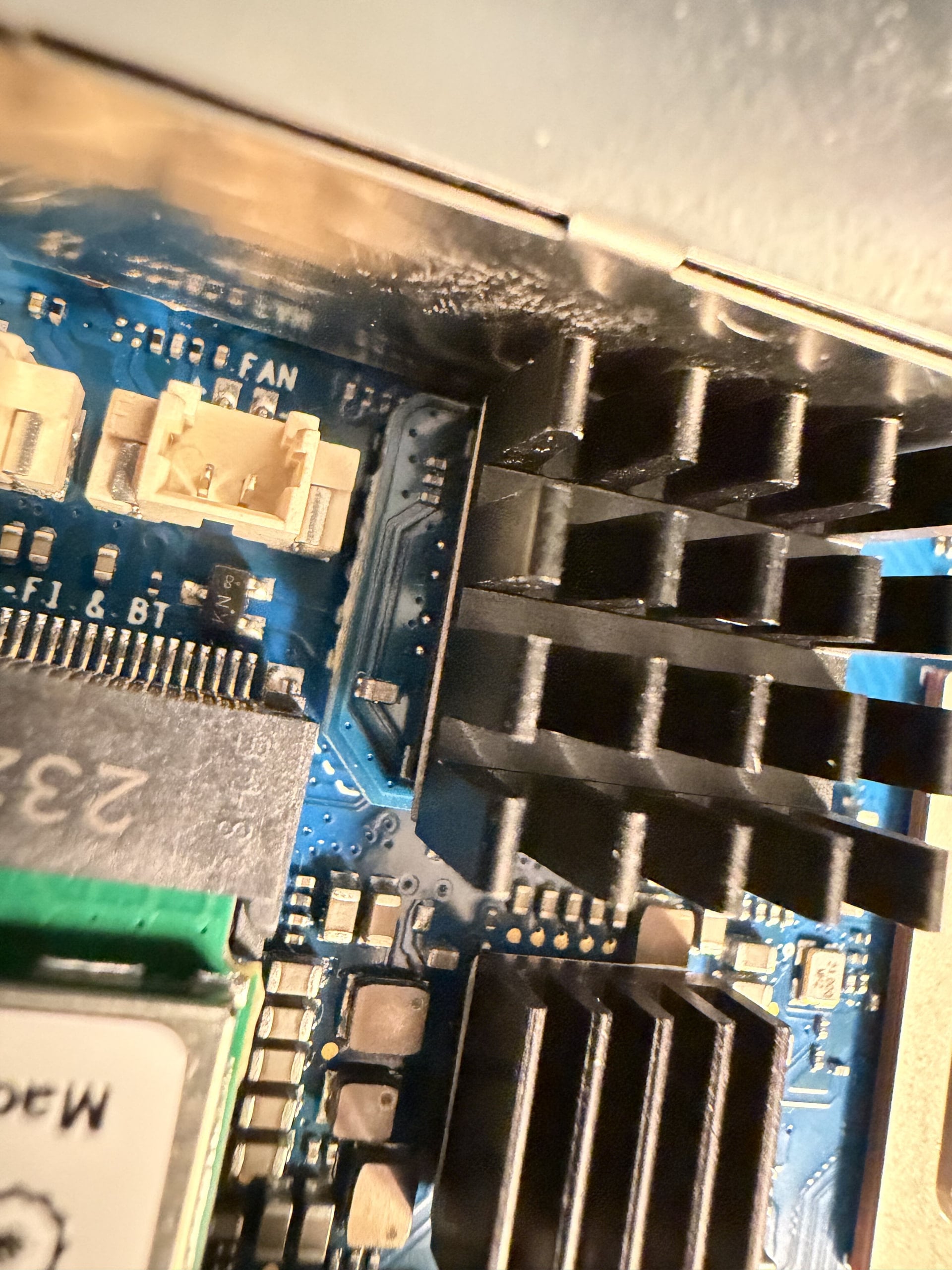
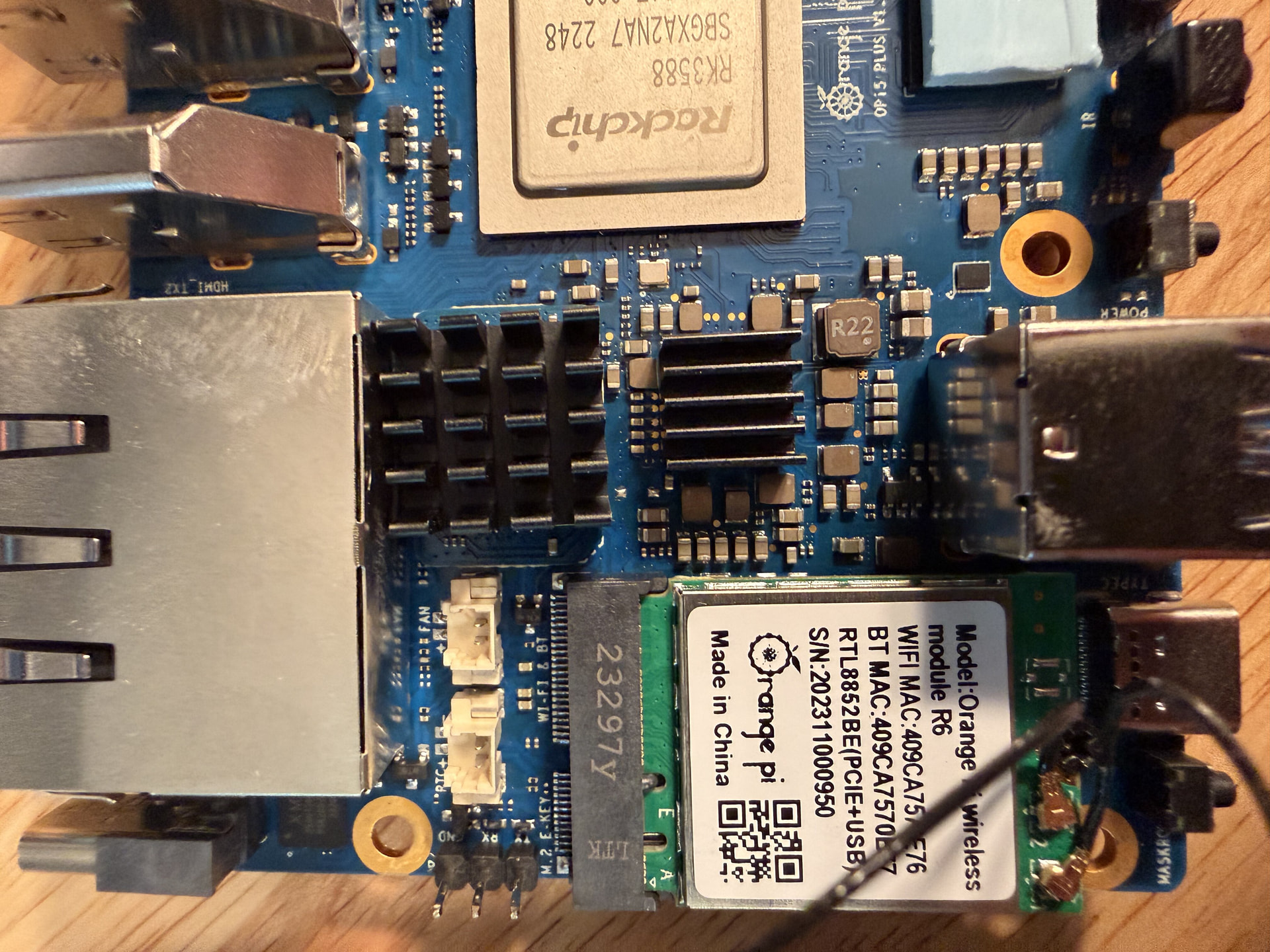
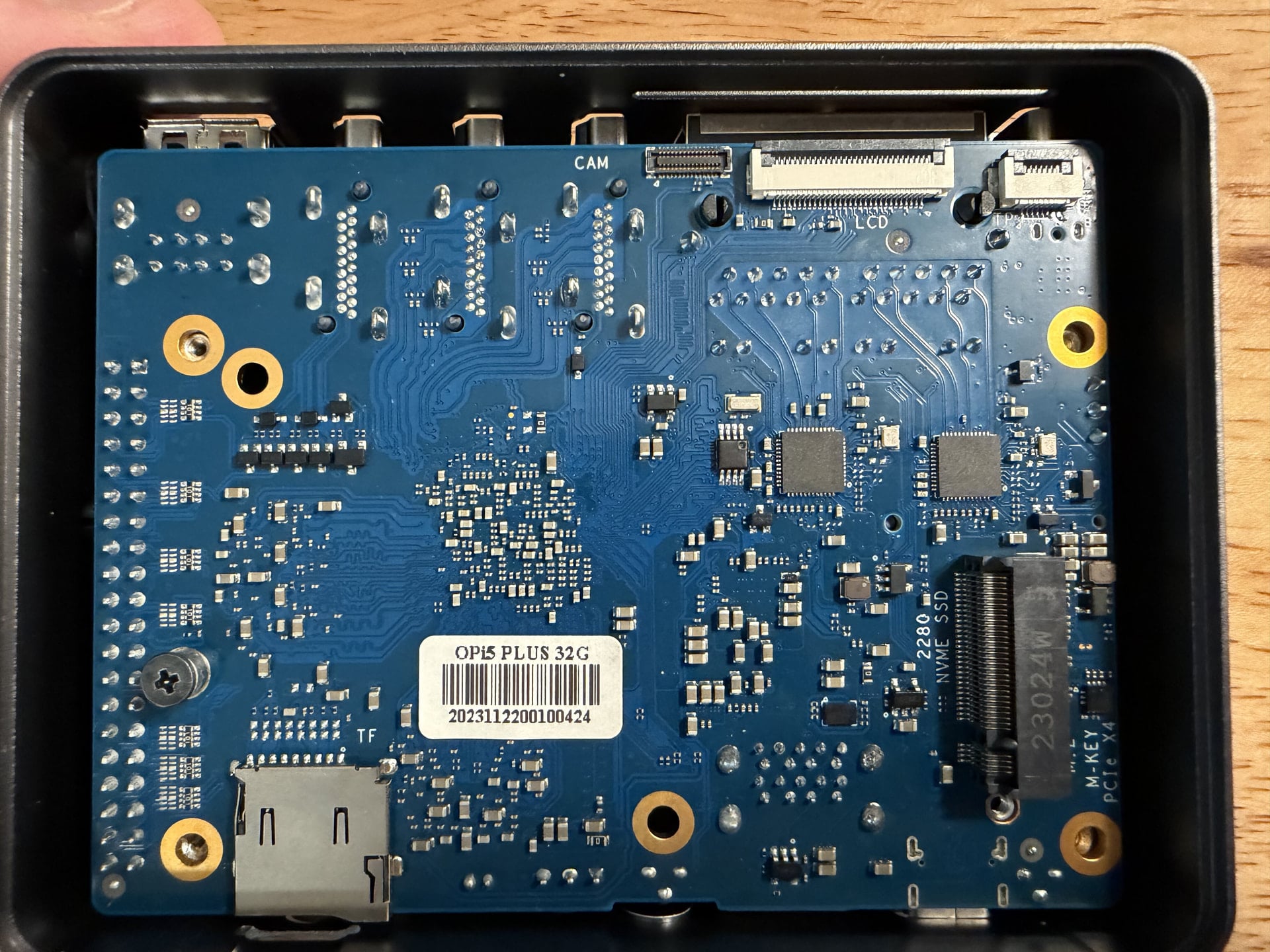
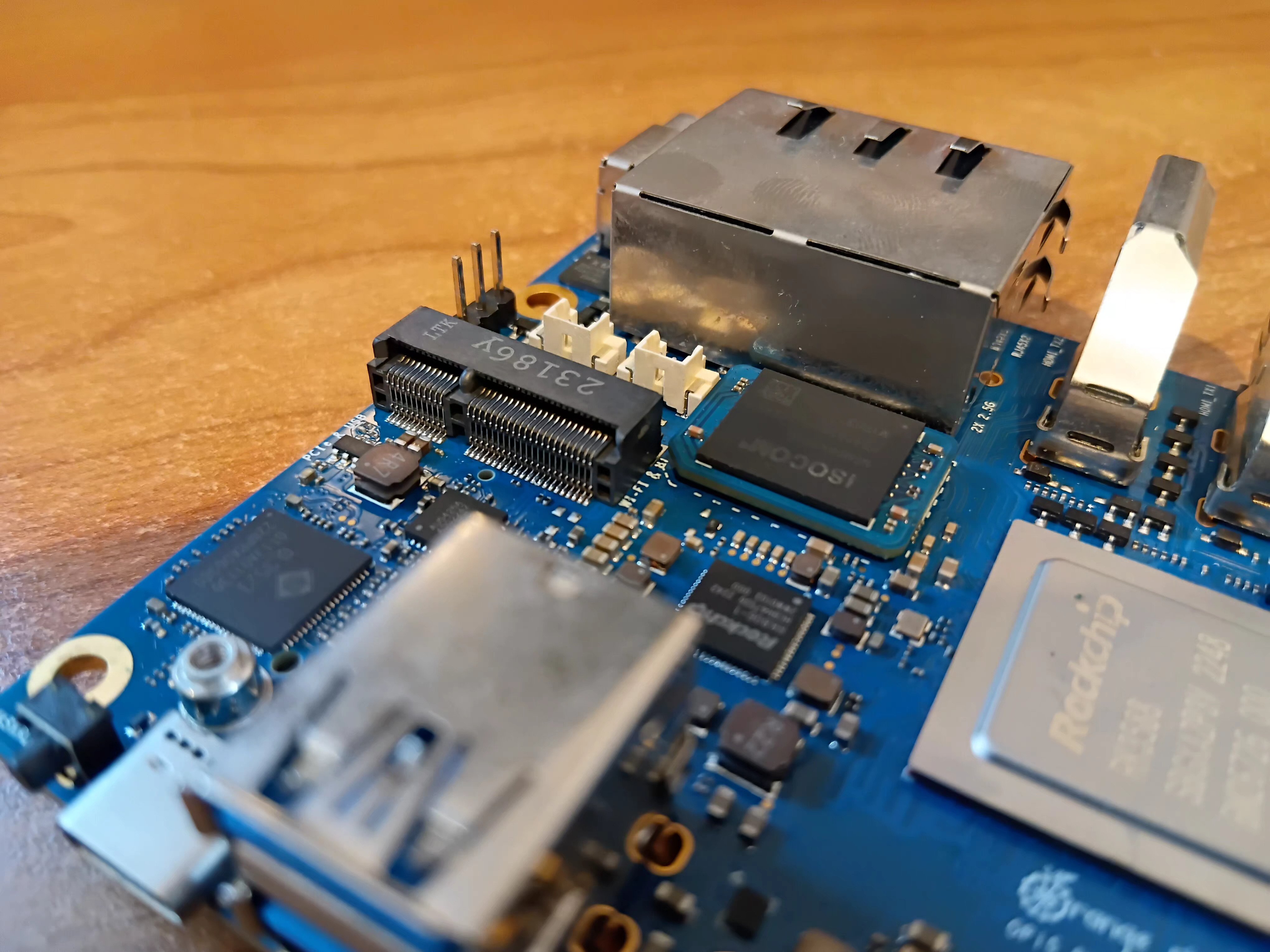
Another hardware question, out of interest: I am not able to attach the eMMC module a way that it looks fully safely plugged with both connector rows. The one at the FAN connector side always stays a bit higher than the one on the other side. It does work, no errors or so, but I have the impression that the FAN connector is located too close to the eMMC slot, preventing the module from being fully plugged without high pressure. Would probably need to file the either the FAN connector or the eMMC module a bit, so that it fully fits  . Is this the same for you?